
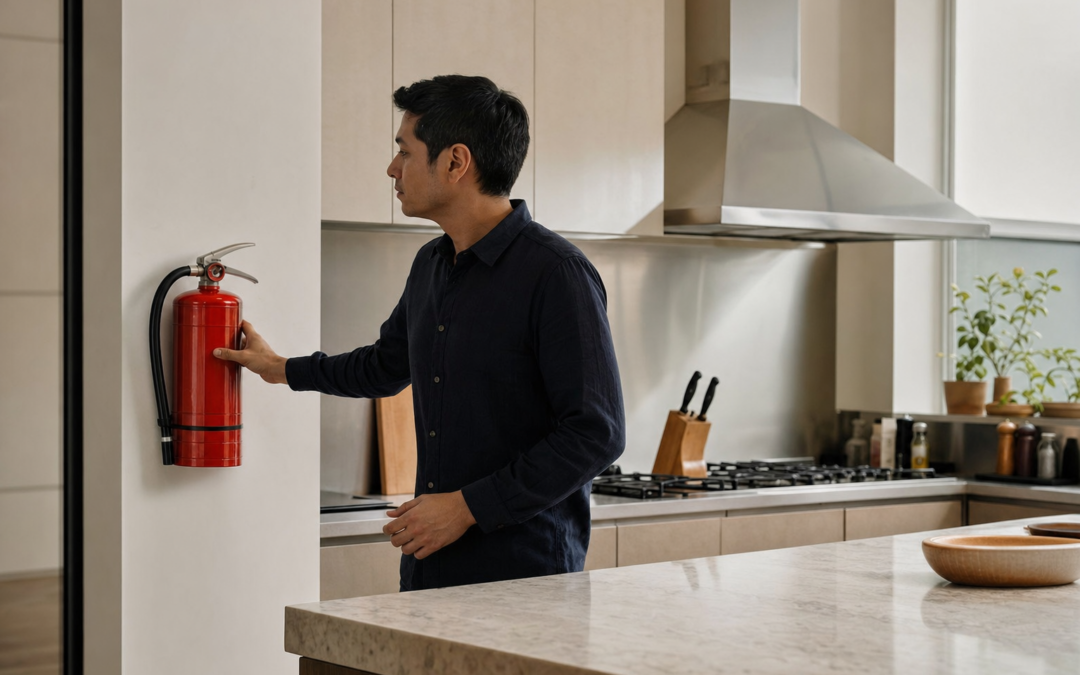
The kitchen is the heart of many American homes, but it’s also the most common source of residential fires. Between sizzling pans, overheated oils, and everyday distractions, accidents can escalate quickly. That’s why having the right fire extinguisher—and knowing exactly where and how to place it—is one of the smartest steps you can take for home safety.
This guide covers everything you need to know about kitchen fire extinguisher placement, types (or “classes”), and essential tips for quick, safe access. Whether you’re outfitting a new kitchen or updating your safety setup, you’ll find practical advice to help you respond confidently in an emergency.
Why Kitchen Fires Are Different—and More Dangerous
Kitchens account for nearly half of all residential fires in the U.S., mostly sparked by unattended cooking, grease, or electrical malfunctions. Unlike other rooms, kitchen fires can spread rapidly due to the presence of flammable oils, cluttered countertops, and appliances. Grease fires in particular behave differently from other flames, requiring special extinguishing agents and techniques.
A standard fire extinguisher might not be enough—or could even make things worse if used incorrectly on a grease or electrical fire. That’s why understanding fire classes and having the right extinguisher type matters more in your kitchen than anywhere else.
Understanding Fire Extinguisher Classes: What’s Right for the Kitchen?
Not all fire extinguishers are created equal. Each is rated for specific types of fires, known as “classes.” The kitchen is a unique environment that demands the right blend of coverage. Here are the main classes you’ll encounter:
- Class A: Ordinary combustibles like paper, wood, and cloth. Useful but not sufficient in kitchens alone.
- Class B: Flammable liquids—especially important for kitchens where grease, oils, and some cleaning products are present.
- Class C: Electrical fires—think appliances, outlets, and wiring.
- Class K: Specifically designed for commercial kitchens, these target high-temperature cooking oils and fats. Most home kitchens can rely on a B-C (or A-B-C) extinguisher, but some high-end or large kitchens may consider a Class K option.
When choosing an extinguisher for your kitchen, look for a model rated at least for Class B and C. Many residential units are labeled “A-B-C,” meaning they’re suitable for most common kitchen fire scenarios. For an in-depth comparison of extinguisher types and uses, see our comprehensive fire safety hub.

Kidde Kitchen + Home Fire Extinguisher Set, 711A Review — Practical fire extinguishers from Kidde, summarized from hub features and listed measurements. Key figures include 2 , 21032628, 2 Pack.
The Dangers of Grease Fires—and Why Water Is the Wrong Choice
Grease fires are a leading cause of kitchen emergencies. When oil or fat overheats and ignites, it burns at extremely high temperatures. Pouring water on a grease fire can cause the burning oil to splatter, spreading flames rapidly and potentially causing severe burns or property damage.
Instead, Class B (and K, for commercial settings) extinguishers use agents that smother the fire by cutting off oxygen and cooling the burning oil. This is why it’s so important to keep the correct extinguisher close at hand and know how to use it—never reach for a glass of water or a wet towel.
Best Locations for Kitchen Fire Extinguisher Placement
Proper placement can mean the difference between a contained incident and a full-blown disaster. Here are the most important principles to guide where you put your kitchen fire extinguisher:
- Accessible, Not Obstructed: Mount or store your extinguisher where you can reach it immediately, without moving appliances or digging through clutter. Avoid under-sink cabinets or deep pantry shelves.
- Near, But Not Too Close to the Stove: The extinguisher should be between 6 and 12 feet from the stove or main cooking area. This ensures you can access it safely without reaching through flames.
- Along the Exit Route: Place the extinguisher so you can grab it while moving toward the kitchen exit. This way, if the fire gets out of control, you’re not trapped between the flames and your only way out.
- Wall-Mounted at Eye Level: Wall mounting keeps extinguishers visible, off the counter, and prevents accidental knocks or misplacement. Eye level is ideal for quick identification and access.
- Keep Away from Heat Sources: Don’t mount extinguishers directly above the stove, oven, toaster, or any appliance that generates heat. Prolonged exposure can damage the extinguisher or make it unsafe to use.
In many kitchens, the best spot is a wall near the entrance or just outside the doorway—close enough to act quickly, but far enough to stay safe.
Step-by-Step: How to Mount and Store a Kitchen Fire Extinguisher
Once you’ve chosen the right spot, it’s time to install your extinguisher for maximum accessibility. Here’s how:
- Choose a Sturdy Wall: Look for a stud or use robust wall anchors to support the extinguisher’s weight.
- Mount at the Right Height: The handle should be about 3 to 5 feet from the floor—eye level for most adults, but not out of reach for older children or short adults.
- Use the Supplied Bracket: Most extinguishers come with a mounting bracket. Secure the bracket firmly and test that the extinguisher clips in and out easily.
- Label the Location: If you have guests, babysitters, or older family members, consider labeling the spot or providing quick instructions nearby.
- Keep the Area Clear: Don’t let dish racks, trash bins, or other items block access. The extinguisher should be visible at a glance.
If wall space is limited, a countertop or open shelf near the exit can work, but avoid closed cabinets or drawers where seconds could be lost during a crisis.
Fire Blanket vs. Fire Extinguisher: Should You Have Both?
A fire extinguisher is your first line of defense, but fire blankets can also play an important role in kitchen safety. Fire blankets are simple, affordable safety tools made from fire-resistant fibers. They work by smothering small flames—especially useful for pan fires or if clothing catches fire.
- Quick to Deploy: Just pull from the pouch and drape over the flames (or wrap around a person).
- No Mess or Clean-Up: Unlike extinguishers, blankets don’t leave chemical residue.
- Safe for All Ages: Easy for children, elderly, or those intimidated by extinguisher operation.
While a blanket won’t replace a properly rated extinguisher, having both provides layered protection. Mount your fire blanket near the stove or prep area, within arm’s reach.

WUERLI Fire Blanket for Home and Kitchen Review — An editorial look at this WUERLI option for fire extinguishers — specs first, marketing second. Key figures include 40, 40 , 4.42909 pounds.
Maintaining Your Kitchen Fire Extinguisher: Checklist for Safety
A fire extinguisher is only as good as its readiness. Too often, extinguishers are left unchecked and become useless in an emergency. Follow these steps to keep yours in peak condition:
- Monthly Visual Check: Ensure the gauge needle is in the green (charged), the safety pin is intact, and there’s no visible damage or corrosion.
- Shake or Invert if Required: Some dry chemical models need periodic shaking to prevent contents from settling. Check your owner’s manual.
- Easy Access: Confirm the extinguisher isn’t buried or blocked by new appliances or kitchen clutter.
- Annual Inspection: Have a professional inspect and service the extinguisher if required, especially if it’s a rechargeable model.
- Replace When Necessary: Disposable home extinguishers should be replaced every 5–12 years (check the manufacturer’s date and recommendations).
Don’t wait until smoke is filling your kitchen to discover your extinguisher is empty or jammed. Mark your calendar for regular checks.
How to Use a Kitchen Fire Extinguisher: The P.A.S.S. Method
In the stress of an emergency, clear steps are crucial. The “P.A.S.S.” acronym is taught by fire departments nationwide:
- P – Pull the pin: This unlocks the extinguisher for use.
- A – Aim low: Point the nozzle at the base of the fire, not the flames.
- S – Squeeze the handle: This releases the extinguishing agent.
- S – Sweep side to side: Move the nozzle in a sweeping motion across the base until the fire is out.
Always keep a clear escape route behind you. If the fire grows or you feel unsafe, evacuate immediately and call 911.

AmzBoom Fire Extinguisher for Home Review — AmzBoom fire extinguishers gear aimed at buyers who want clear specs before they click through. Key figures include 3 PACK, 3 Pack, 2.6 .
Common Mistakes to Avoid with Kitchen Fire Extinguishers
Even well-intentioned homeowners can make critical errors in fire emergencies. Here are the most frequent mistakes and how to avoid them:
- Placing Extinguishers Too Close to the Stove: If fire blocks your access, you’ll be left empty-handed. Keep at least 6 feet of space.
- Hiding Extinguishers in Cabinets: Precious seconds are lost digging through cleaning supplies or under-sink clutter.
- Using the Wrong Class Extinguisher: Water, soda-acid, or Class A-only extinguishers can make grease or electrical fires worse.
- Letting Maintenance Slide: Expired, discharged, or corroded extinguishers won’t work when needed.
- Failing to Train Family Members: Everyone in the home should know where extinguishers are and how to use them.
A little planning and education go a long way towards preventing small mishaps from becoming life-threatening emergencies.
How Many Fire Extinguishers Does Your Kitchen Need?
For most single-family kitchens, one properly placed extinguisher is sufficient. However, larger homes, open-concept kitchens, or homes with multiple cooking zones may benefit from having two extinguishers—one near each main exit or cooking area.
If your kitchen opens into a dining or living area, consider placing an additional extinguisher just outside the kitchen. This ensures help is always within reach, even if one path is blocked by fire.
For households with children or elderly residents, an extra fire blanket or a lightweight “spray can” style extinguisher can add peace of mind.

AmzBoom Fire Extinguisher for Home Review — An editorial look at this AmzBoom option for fire extinguishers — specs first, marketing second. Key figures include 8, 1 , 2.
Special Considerations: Apartment Kitchens, Rental Units, and Shared Spaces
If you live in an apartment, condo, or rental property, your options and responsibilities might differ:
- Check Local Codes: Some municipalities and landlords require fire extinguishers in rental units. Confirm your rights and obligations.
- Don’t Rely on Building Extinguishers Alone: Hallway or utility room models may be too far away during a fast-moving kitchen fire.
- Communicate with Roommates: Make sure everyone knows extinguisher locations and how to use them.
- Portable, Easy-to-Use Models: Compact extinguishers or fire blankets are ideal for small kitchens with limited wall space.
Even if your landlord provides an extinguisher, regular checks are your responsibility. Don’t assume it’s ready just because it’s present.
Teaching Kitchen Fire Safety to Your Household
An extinguisher is only effective if everyone knows how to use it. Take time to walk your family, roommates, or frequent guests through:
- Where extinguishers and fire blankets are located
- The P.A.S.S. method for extinguisher operation
- How to recognize different types of fires (grease, electrical, etc.)
- When to evacuate and call 911 instead of attempting to fight the fire
- How to shut off burners, ovens, and appliances safely
Consider a quick “fire drill” to practice locating and simulating extinguisher use. The more familiar everyone is, the faster and safer their response will be.
Frequently Asked Questions About Kitchen Fire Extinguishers
- Should I choose a refillable or disposable extinguisher?
Disposable models are affordable and low-maintenance—just replace after use or expiration. Refillable (rechargeable) extinguishers cost more but can be serviced after discharge, making them a good choice for long-term use. - How do I dispose of an expired or used extinguisher?
Never throw extinguishers in the trash. Contact your local fire department, hazardous waste center, or recycling facility for proper disposal instructions. - Can I use a standard ABC extinguisher on all kitchen fires?
Yes, for most home kitchens an ABC-rated extinguisher is appropriate. For very large or commercial-style kitchens, consider adding a Class K extinguisher for deep fat fryers or high-volume oil cooking. - What size extinguisher is best for a kitchen?
2.5 to 5-pound models are ideal for kitchens—large enough for effectiveness, small enough for easy handling.
Final Tips: Making Your Kitchen Fire-Ready
A kitchen fire can start in seconds, but with the right extinguisher and smart placement, you’ll be prepared to act fast. Remember:
- Choose a Class B-C or A-B-C extinguisher, and consider adding a fire blanket for extra safety.
- Mount your extinguisher 6–12 feet from the stove, along your exit route, and never behind closed doors or cabinets.
- Check your extinguisher monthly, replace as needed, and ensure everyone in your household knows how to use it.
- Never use water on a grease or electrical fire—use the right extinguisher or a fire blanket.
- Stay calm, act quickly, and always keep an escape route clear.
For more on home fire prevention and the best safety products, visit our main fire safety hub. A few minutes spent now can prevent tragedy later.
Fire Extinguisher Maintenance and Inspection Tips
Even the best fire extinguisher is useless if it fails in an emergency. Regular maintenance ensures your extinguisher will work when you need it most. Here’s how to keep your kitchen fire extinguisher in top condition:
- Monthly Visual Checks: Inspect the extinguisher every month. Make sure it’s in its designated spot, unobstructed, and easily accessible.
- Check the Pressure Gauge: The needle should be in the green zone. If it’s not, the extinguisher may not work properly and should be serviced or replaced.
- Look for Damage: Examine the canister, hose, and nozzle for dents, rust, leaks, or other signs of wear. Any visible damage warrants replacement.
- Shake or Invert (if required): Some dry chemical extinguishers need to be gently shaken or inverted periodically to prevent the powder from settling. Consult the manufacturer’s instructions for your model.
- Annual Professional Inspection: Many local fire departments or certified fire equipment companies offer professional inspections and servicing. This is especially important for larger or rechargeable extinguishers.
- Replace or Recharge After Use: Even if you only discharge a small amount, replace or professionally recharge the extinguisher right away.
- Check the Expiry Date: Most extinguishers last 5–15 years. If yours is expired, replace it promptly.
Regular maintenance not only keeps your extinguisher ready but also extends its lifespan and effectiveness.
Common Mistakes to Avoid With Kitchen Fire Extinguishers
It’s easy to make small errors that have big consequences during a fire emergency. Avoid these frequent mistakes:
- Hiding the Extinguisher: Don’t store it in a drawer, behind heavy objects, or in a locked cabinet. Quick access is crucial.
- Mounting Too Close to the Stove: Placing the extinguisher right above or next to the stove can make it unreachable during a fire. Stick to the recommended 6–12 feet away.
- Choosing the Wrong Type: Using a water or Class A-only extinguisher on grease or electrical fires can make things worse. Always check the label for Class B and C ratings.
- Neglecting Training: All household members should know where the extinguisher is and how to use it. A quick review of the PASS (Pull, Aim, Squeeze, Sweep) technique makes a big difference.
- Ignoring Expiry Dates: An expired or depressurized extinguisher may fail when you need it most.
Awareness and prevention are as important as the extinguisher itself—don’t overlook these basics.
Kitchen Fire Extinguisher Placement Checklist
Before you finish your kitchen safety setup, use this checklist to confirm you’ve covered the essentials:
- Is your extinguisher rated for at least Class B and C fires?
- Is it installed or mounted 6–12 feet from the stove, along an exit route?
- Is it visible, at eye level, and not blocked by clutter or appliances?
- Is it away from direct heat sources (not above or beside the stove)?
- Is everyone in the household aware of its location and trained to use it?
- Is the pressure gauge in the green, with no visible damage?
- Has it been checked or serviced in the last month?
- Is the expiration date still valid?
Completing this checklist helps ensure your extinguisher will be ready and effective in an emergency.
Frequently Asked Questions About Kitchen Fire Extinguishers
Can I use an A-B-C extinguisher in the kitchen?
Yes, most A-B-C extinguishers are suitable for home kitchens, as they handle ordinary combustibles, flammable liquids, and electrical fires. Always confirm the label includes Class B and C.
How often should I replace my kitchen fire extinguisher?
Check the manufacturer’s expiration date—usually every 5 to 15 years. Replace immediately if you notice damage, a lost charge, or after any use.
Should I have more than one extinguisher in my kitchen?
For larger kitchens or open floor plans, consider placing a second extinguisher at another exit or on the opposite side of the room for added safety.
What’s the best way to teach family members to use an extinguisher?
Review the PASS method: Pull the pin, Aim at the base of the fire, Squeeze the handle, and Sweep side to side. Practice with a training unit or empty extinguisher if possible.
Can I refill a disposable fire extinguisher?
No, disposable (single-use) extinguishers must be replaced after use. Only rechargeable models can be refilled by a certified professional.
What if my extinguisher loses pressure but isn’t expired?
If the pressure gauge drops below the green zone, the extinguisher may not work. Replace or have it professionally serviced right away, regardless of the expiration date.
Final Thoughts: Don’t Wait Until It’s Too Late
A kitchen fire can happen in seconds—but with the right extinguisher, smart placement, and regular maintenance, you’ll be prepared to act fast and keep your home safe. Take a moment today to review your kitchen’s setup, educate your family, and make fire safety a regular habit.
Our content is researched and drafted with AI assistance and reviewed by our team. Product details come from published specs, manufacturer information and owner reviews.