
Having a reliable fire extinguisher in your home is one of the simplest but most critical steps you can take to protect your family and property. Whether it’s a kitchen grease fire, an electrical short in the garage, or a candle mishap in the living room, the right extinguisher—placed in the right spot—can stop a small accident from turning into a devastating disaster. But with so many options, sizes, and types on the market, choosing the best home fire extinguisher can feel overwhelming, especially when safety is on the line.
This guide will walk you through the essential factors: understanding ABC versus kitchen-specific models, choosing the right size, and mounting tips for effective placement. We’ll also cover kitchen-specific needs, the value of fire blankets, and how to maintain and use your extinguisher. By the end, you’ll have a clear, practical plan for fire safety at home—without guesswork or hype.
Why Every Home Needs a Fire Extinguisher
According to the National Fire Protection Association (NFPA), U.S. fire departments respond to a home fire every 93 seconds. Most home fires start in the kitchen, but electrical faults, heaters, and candles are also frequent culprits. The first few minutes of a fire are critical: a small, manageable blaze can quickly escalate, making evacuation the only safe option. Having an extinguisher readily accessible—and knowing how to use it—can be the difference between a close call and a total loss.
Fire extinguishers aren’t just for homeowners; renters, apartment dwellers, and anyone living in shared housing should have at least one suitable extinguisher. Even if your building is equipped with fire alarms and sprinklers, a portable extinguisher is your first line of defense for small, contained fires.
Understanding Fire Extinguisher Types: ABC vs. Kitchen Units
All fire extinguishers are not created equal. The most common home extinguishers are labeled “ABC”—meaning they’re effective against three classes of fire:
- Class A: Ordinary combustibles like wood, paper, and cloth.
- Class B: Flammable liquids such as grease, oil, and gasoline.
- Class C: Electrical fires involving appliances, wiring, or outlets.
ABC extinguishers use a dry chemical agent (usually monoammonium phosphate) to smother flames. They offer versatility, making them ideal for general household use. However, kitchen fires—especially grease fires—require special care. Spraying a dry chemical extinguisher might spread burning oil or cause a burst of hot steam, increasing the risk of burns.
For kitchens, look for extinguishers specifically rated for grease and cooking oil fires (Class K). In practice, most home kitchen extinguishers are labeled as “BC” or “ABC with kitchen use,” but double-check the packaging and instructions. These units may use a foam or wet chemical to safely cover burning oils without splatter.
For a full overview of fire safety equipment and types, see our fire safety hub for more details.

Kidde Kitchen + Home Fire Extinguisher Set, 711A Review — Practical fire extinguishers from Kidde, summarized from hub features and listed measurements. Key figures include 2 , 21032628, 2 Pack.
Choosing the Right Size Extinguisher for Your Home
Fire extinguishers come in several sizes, usually measured in pounds (the weight of the extinguishing agent, not the total unit). Here’s how to choose:
- 2-3 lbs: Compact, easy to handle, and ideal for kitchens, cars, or small apartments. Can be mounted inside a cabinet or pantry.
- 5 lbs: Good all-purpose size for most rooms. Offers more firefighting capacity while still being manageable for most adults.
- 10 lbs and up: Heavy-duty, best for garages, workshops, or areas where a larger fire risk exists (like a furnace room). These can be bulky for quick use, so consider accessibility.
It’s better to have several appropriately-sized extinguishers distributed throughout your home than one oversized unit in a hard-to-reach spot. The best strategy is to keep a small, quick-access extinguisher in the kitchen and a larger ABC unit near exit routes or in utility areas.

AmzBoom Fire Extinguisher for Home Review — AmzBoom fire extinguishers gear aimed at buyers who want clear specs before they click through. Key figures include 3 PACK, 3 Pack, 2.6 .
Where to Mount and Place Fire Extinguishers
Proper placement is as important as the extinguisher itself. A fire extinguisher is only useful if you can reach it quickly and safely. Here are key tips for mounting and placement:
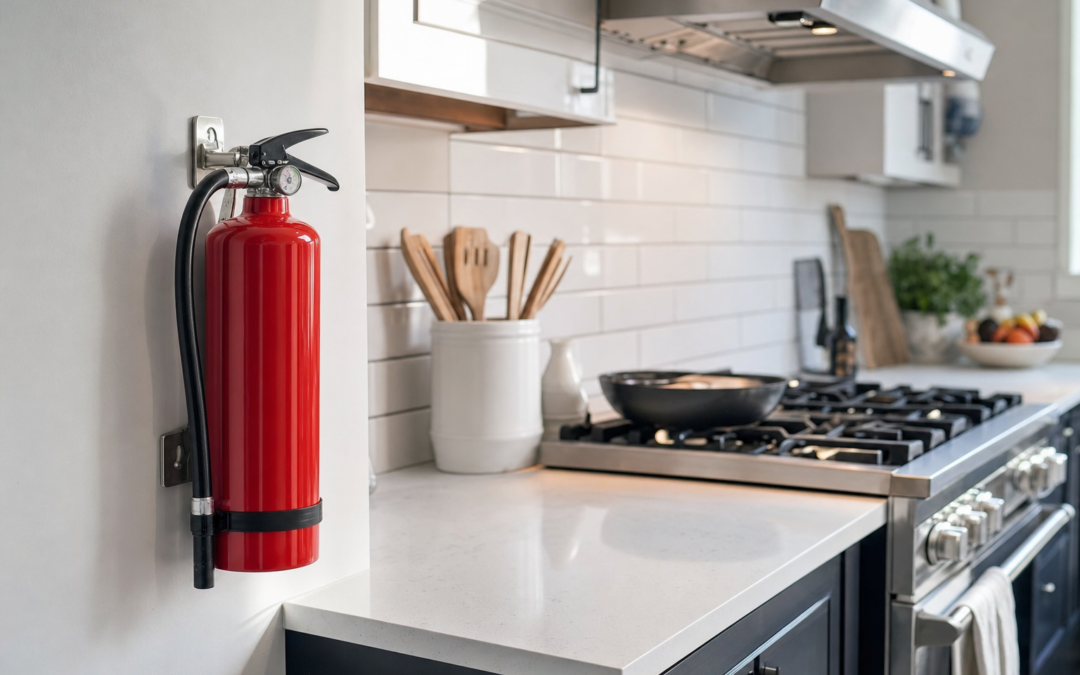
- Kitchen: Mount the extinguisher near an exit—never directly above or next to the stove. If a fire erupts on the cooktop, you want a clear escape route, not a device blocked by flames.
- Garage/Workshop: Place near an entry door, away from gasoline cans, flammable materials, or machinery.
- Bedrooms: Especially in multi-story homes, consider a small extinguisher in the hallway or near sleeping areas for nighttime emergencies.
- Basement/Utility Room: Mount on a visible wall, not hidden behind boxes or appliances.
Always mount extinguishers between 3.5 and 5 feet off the ground, so they’re accessible but out of reach of small children. Use the manufacturer’s bracket for secure mounting, and avoid placing units where they could be knocked over or blocked by clutter.
Special Considerations for Kitchen Fire Safety
The kitchen is the most common location for home fires, mainly due to cooking accidents. Grease fires, in particular, are fast-moving and dangerous—never use water to extinguish them, as this can cause violent flare-ups. For optimal kitchen safety:
- Choose a kitchen-rated extinguisher or a small BC extinguisher with clear labeling for grease fires.
- Store the extinguisher in a visible, easy-to-reach spot (not in a drawer or behind the stove).
- Consider a fire blanket as a backup—these can be thrown over a burning pan or wrapped around a person if clothing catches fire.
- Regularly remind family members how to use the extinguisher and fire blanket.
For homes with children or elderly residents, make sure everyone understands the basics of kitchen fire safety, including how to safely evacuate if a fire grows beyond control.

WUERLI Fire Blanket for Home and Kitchen Review — An editorial look at this WUERLI option for fire extinguishers — specs first, marketing second. Key figures include 40, 40 , 4.42909 pounds.
Fire Blankets: An Overlooked Kitchen Safety Tool
Fire blankets are a simple, effective supplement to fire extinguishers, especially in kitchens. Made from fire-resistant fiberglass or similar materials, they work by smothering flames—ideal for small stovetop fires or if clothing ignites. Unlike extinguishers, they leave no mess, require no maintenance, and are safe for all users.
To use a fire blanket, pull it from its pouch, shield your hands, and gently lay it over the fire. For a person, wrap the blanket around them and help them “stop, drop, and roll.” Fire blankets can be stored in a drawer, hung on a wall, or mounted in a cabinet next to the stove for instant access.
Keep in mind: fire blankets are for small, contained fires only. If a fire is spreading, evacuate and call 911. But for pan fires or minor incidents, they’re an invaluable addition to your kitchen safety kit.

40”x40” Fire Blanket for Home and Kitchen Firemen Safety Gifts Review — RESCUE GUARD fire safety gear aimed at buyers who want clear specs before they click through. Key figures include 1 Pack, 60001, 1.28089 pounds.
How to Use a Fire Extinguisher: The PASS Method
Even the best extinguisher is only effective if you know how to use it. The standard technique is the PASS method:
- Pull the pin to break the tamper seal.
- Aim low, pointing the nozzle at the base of the fire.
- Squeeze the handle to release the extinguishing agent.
- Sweep from side to side at the base of the fire until it is out.
Always keep your back to an exit. If the fire does not go out quickly, or if it grows, evacuate immediately and call emergency services. Practice the PASS steps mentally or with an empty training extinguisher so you’re not caught off guard in a real emergency.
Maintenance and Inspection: Keeping Your Extinguisher Ready
Many homeowners buy a fire extinguisher and forget about it until it’s needed—which can be a major problem if the unit is expired or depressurized. To ensure reliability:
- Check the pressure gauge monthly. The needle should be in the green zone.
- Inspect for visible damage, corrosion, or leaks. Replace if the pin, hose, or nozzle is compromised.
- Gently shake dry chemical extinguishers every few months to prevent the powder from settling.
- Replace or recharge after any use, even partial discharge.
- Follow the manufacturer’s expiration date—most extinguishers last 5-15 years.
Some local fire departments offer free extinguisher checks or training days. Take advantage of these community resources, especially if you’re new to home fire safety.
ABC vs. Kitchen Extinguishers: What’s Best for Each Room?
ABC extinguishers are a safe, all-around choice for most living spaces, garages, and hallways. Their versatility covers nearly any fire you might encounter in a home environment. However, kitchens have unique hazards:
- Kitchen: Opt for a kitchen-rated or BC extinguisher, ideally with a fire blanket nearby. These are specifically designed to handle grease and cooking oil fires without dangerous splatter.
- Garage/Workshop: A 5-10 lb ABC extinguisher is ideal due to the presence of flammable liquids and electrical equipment.
- Bedrooms/Hallways: Smaller ABC units are suitable, especially if mounted near escape routes.
If you have only one type, an ABC extinguisher is a good compromise, but supplement with a kitchen unit or fire blanket wherever cooking is done. Always read the manufacturer’s instructions to ensure the extinguisher is safe for your intended use.
Placement Mistakes to Avoid
Even the best fire extinguisher can be rendered useless by poor placement. Common mistakes include:
- Storing extinguishers in closets or behind locked doors.
- Mounting too high or out of reach for all household members.
- Keeping units too close to high-risk areas (e.g., directly next to the stove).
- Allowing furniture, boxes, or appliances to block access.
- Failing to clearly label or point out extinguisher locations to guests or children.
Conduct a home walk-through with your family. Identify the most likely fire sources and ensure extinguishers are visible, accessible, and unobstructed. Consider installing glow-in-the-dark labels or signs for nighttime emergencies.
Fire Extinguisher Limitations: When to Evacuate
It’s important to know what fire extinguishers can’t do. They’re designed for small, contained fires—think a burning pan, a wastebasket, or a small appliance. If a fire is spreading, producing thick smoke, or blocking your exit, your first priority is to get out safely and call 911. Never risk your life or the lives of others for property.
Teach everyone in your household that extinguishers are for quick, initial response. If there’s any doubt or hesitation, evacuate immediately. Smoke inhalation and rapid fire spread are the greatest dangers in a home fire situation.
Building a Complete Home Fire Safety Plan
Choosing and installing the right fire extinguishers is just one part of a comprehensive home fire safety strategy. Make sure your plan includes:
- Working smoke detectors on every level and inside bedrooms—test monthly.
- Fire escape ladders for multi-story homes.
- A family escape plan with two ways out of every room and a designated meeting spot outside.
- Regular fire drills, especially with children or elderly family members.
- Clear, accessible paths to all exits—never block doors or windows.
By combining well-placed extinguishers, fire blankets, alarms, and a practiced escape plan, you’ll be prepared to handle most fire emergencies confidently and effectively.
Summary: The Right Fire Extinguisher for Every Home
In summary, the best home fire extinguisher is the one that fits your household’s specific needs and is always accessible. Equip your kitchen with a grease-fire-safe extinguisher and a fire blanket, place an ABC unit in your garage and hallways, and check all devices regularly. Mounting and placement matter just as much as the extinguisher itself, and everyone in your home should know where units are and how to use them.
For more expert advice on fire safety and to explore recommended products, visit our dedicated fire safety resource hub. A few minutes invested now can make all the difference when seconds count.
Fire Extinguisher Maintenance: Simple Steps for Reliability
Owning a fire extinguisher is only half the battle—regular maintenance ensures it will function properly when you need it most. Here’s how to keep your extinguisher in top condition:
- Inspect monthly: Check the pressure gauge to confirm the needle is in the green zone. Look for any signs of damage, corrosion, or leakage around the nozzle and handle.
- Shake dry chemical extinguishers: Gently invert or shake them every few months to prevent the powder from settling or clumping, especially in humid environments.
- Ensure accessibility: Make sure extinguishers are not blocked by furniture, boxes, or other obstacles. Labels and instructions should be clearly visible.
- Check the expiration date: Most extinguishers last 5–15 years. Look for a manufacturing or expiration date on the label and replace expired units promptly.
- Professional servicing: Recharge or replace extinguishers after any use, even partial. Some rechargeable models should be professionally inspected and serviced every 6 years, even if unused.
Keep a log of your checks and maintenance so you don’t miss a critical inspection. For multi-unit homes, assign responsibility for regular checks to a specific person.
Common Mistakes When Buying or Using Fire Extinguishers
- Buying the wrong type: Using a water-based extinguisher on a grease or electrical fire can worsen the situation. Always select the correct class for your intended area.
- Placing extinguishers out of reach: Extinguishers hidden under the sink, behind appliances, or in locked cabinets can cost you precious seconds in an emergency.
- Not reading the instructions: Every extinguisher is slightly different. Take a moment to familiarize yourself with the operation—don’t wait until you’re panicking.
- Ignoring small units: Many people think bigger is better, but a lightweight extinguisher is more likely to be used quickly and effectively in a real emergency, especially by children or seniors.
- Forgetting replacement after use: Even a brief discharge can reduce pressure or deplete the agent. Recharge or replace immediately after any use.
Reviewing these pitfalls with your family can dramatically increase your home’s safety and confidence in an actual fire situation.
Home Fire Extinguisher Checklist
- At least one ABC extinguisher on every floor
- Dedicated kitchen extinguisher (Class K or rated for grease fires)
- Extinguishers mounted near exits, not inside potential fire traps
- Pressure gauge in the green (charged and ready)
- Instructions label readable and facing outward
- No visible rust, dents, or leakage
- Family members know PASS technique (Pull, Aim, Squeeze, Sweep)
- Extinguishers not blocked by furniture or clutter
- Expiration date checked; unit replaced if expired
- Fire blanket available for kitchen or bedroom
Use this checklist during your regular home safety reviews to make sure you’re covered from every angle.
Frequently Asked Questions About Home Fire Extinguishers
How often should I replace my fire extinguisher?
Most fire extinguishers last between 5 and 15 years, depending on the manufacturer and whether they’re rechargeable or disposable. Check the label for an expiration date, and replace any unit that’s damaged, discharged, or past its service life.
Can I refill a used extinguisher, or do I have to buy a new one?
Rechargeable extinguishers (usually metal valves) can be refilled by a professional service after use. Disposable models (typically plastic valves) should be replaced after any use. Always check your extinguisher’s instructions and labeling.
What is the PASS technique?
PASS stands for Pull, Aim, Squeeze, and Sweep—the four basic steps to operate most fire extinguishers:
- Pull the pin to unlock the extinguisher.
- Aim low at the base of the fire.
- Squeeze the handle to release the agent.
- Sweep from side to side until the fire is out.
Review this technique with everyone in your household, and consider watching a demonstration video or attending a local fire safety class for hands-on experience.
Where should I NOT store a fire extinguisher?
Avoid keeping extinguishers in places with extreme temperatures (like uninsulated garages or attics), or where they could be blocked by doors, furniture, or clutter. Never store a kitchen extinguisher directly above the stove, as this area may be inaccessible during a fire.
What should I do after using a fire extinguisher?
Even if you only use a small amount of agent, the extinguisher should be recharged or replaced right away. Clean up any residue according to the manufacturer’s instructions, and review your fire safety plan to address what went well and what could be improved.
Quick Tips for Safe Kitchen Placement
- Mount the extinguisher on a wall near, but not directly above or beside, the stove—ideally by the exit.
- Keep the unit visible and within easy reach, but out of range of children’s play areas.
- Avoid storing in deep cabinets, under sinks, or behind doors where access is delayed.
- Pair your extinguisher with a fire blanket for oil or pan fires.
Proper placement and visibility are just as important as choosing the right extinguisher. A few minutes of planning can save lives and property.