
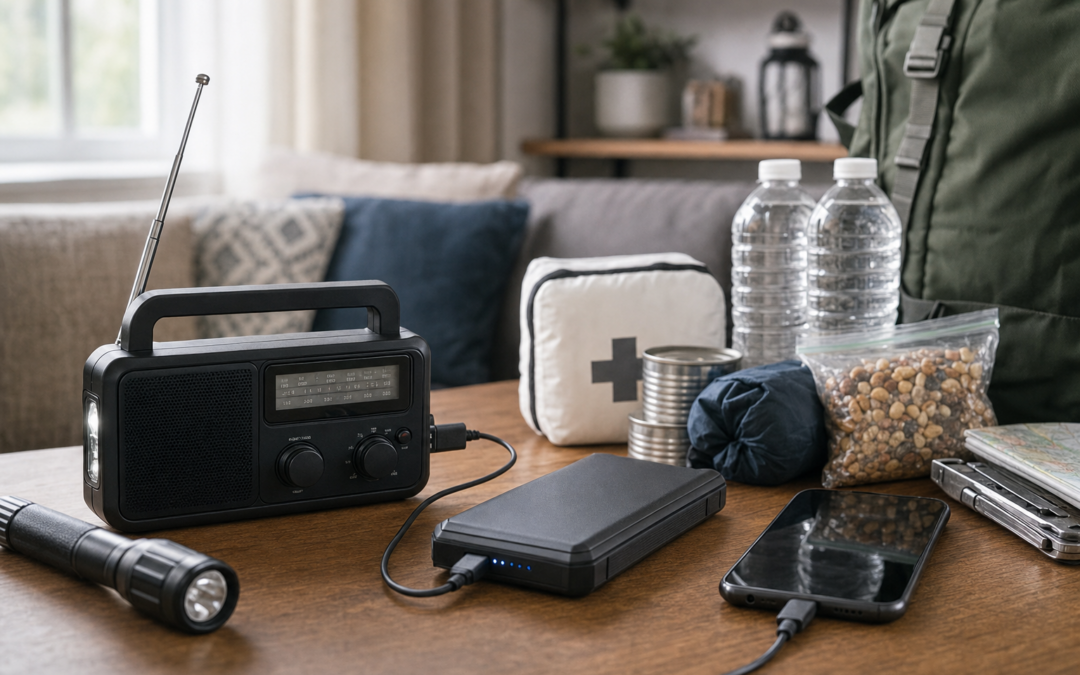
When the power goes out—whether from storms, wildfires, or grid failures—staying informed and connected is vital. An emergency radio paired with reliable power banks can be a lifeline, keeping you updated with NOAA weather alerts and maintaining access to critical devices like phones or flashlights. Building a practical emergency radio and power bank setup isn’t just about buying gear; it’s about understanding how these tools work together, how to use them effectively, and how to maintain readiness year-round.
This guide walks you through every step of creating a robust emergency communication and power solution for your home or vehicle. We’ll cover choosing the best NOAA radios, selecting and maintaining power banks, integrating solar options, and organizing your setup for maximum efficiency. For a broader look at all aspects of readiness, explore our emergency preparedness hub for more essential tips and gear reviews.
Why Emergency Radios and Power Banks Matter in Outages
When disaster strikes, electricity and internet service are often among the first things to fail. Cell towers can go down, and local news stations may be unable to broadcast. In these moments, an emergency radio—especially one that receives NOAA Weather Radio frequencies—becomes a vital source of real-time alerts about severe weather, evacuation orders, or other hazards. However, these radios and other essentials (like smartphones and flashlights) require power, which is why reliable power banks are equally important in any emergency kit.
Combining these two tools ensures you can receive critical information, communicate, and keep your devices running even during prolonged outages.
Understanding NOAA Weather Radios
NOAA Weather Radios are specialized devices that receive broadcasts from the National Oceanic and Atmospheric Administration. These broadcasts include severe weather warnings, Amber alerts, and other emergency messages specific to your region. Unlike AM/FM radios, NOAA radios are designed to work even if local stations are off the air, provided you have power.
- Alert Features: Many models offer Specific Area Message Encoding (SAME) to filter alerts for your county or area, reducing false alarms.
- Power Options: The best units include multiple power sources—battery, crank, solar, or USB charging.
- Portability: Handheld or compact models are ideal for home, car, or outdoor use.
- Extra Functions: Some radios include built-in flashlights, USB outlets for charging devices, or even sirens.
When selecting a NOAA radio, prioritize those that are officially certified and have a history of reliable performance. The ability to operate without grid power is a must.
Choosing the Right Emergency Radio: Key Features to Consider
The market for emergency radios can be overwhelming, but focusing on a few critical features helps narrow your choices. Here’s what to look for:
- NOAA Certification: Ensure your radio picks up all seven NOAA weather channels.
- Multiple Power Sources: Look for radios that can run on replaceable batteries, built-in rechargeable batteries, hand-crank generators, and solar panels. The more options, the better.
- USB Charging Output: Radios with USB output let you charge other devices, doubling as a backup power bank in a pinch.
- Durability: Water-resistant or ruggedized models are preferable for emergencies, especially in storm-prone areas.
- Alert Function: Radios that sound an alarm or turn on automatically when a warning is broadcast ensure you don’t miss critical information while you sleep.
- Portability: Consider size and weight if you might need to evacuate or carry the radio in a go-bag.
Reading user reviews and checking battery life specs can also help you avoid radios with unreliable performance or poor build quality.
Power Banks: Essential Backup for Devices and Radios
Modern emergency radios often include rechargeable batteries, but you’ll need a way to keep them topped up during a prolonged outage. That’s where power banks come in. A power bank is a portable battery pack that can charge phones, radios, flashlights, and other USB-powered devices. In outages, a well-chosen power bank means the difference between a dead device and staying connected.
When choosing power banks for your emergency kit, consider the following:
- Capacity: Measured in milliamp-hours (mAh). For emergencies, aim for at least 10,000mAh per person. Larger families or those wanting to charge multiple devices at once should look for 20,000mAh or more.
- Multiple Outputs: Power banks with two or more USB ports allow simultaneous charging of radios and phones.
- Fast Charging: Look for models with Quick Charge or Power Delivery (PD) support for faster charging of modern devices.
- Rugged Design: Water-resistant and drop-proof models are ideal for outdoor or storm-prone areas.
- Pass-Through Charging: Some power banks can be charged while simultaneously charging other devices—a useful feature if you have limited charging opportunities.
Regularly check your power banks, recharge them every 3-6 months, and replace them if they begin to lose capacity.
Integrating Solar Chargers: Unlimited Power During Extended Outages
During prolonged outages, solar chargers become a valuable addition. They can recharge your power banks or radios during daylight, providing potentially unlimited power as long as you have sunlight. Here’s how to make solar work for you:
- Panel Size and Output: For emergency use, look for foldable panels rated at least 10-20 watts, which can reliably charge a phone or power bank in a few hours of good sunlight.
- Portability: Fold-out panels are easy to store and pack in a go-bag.
- Direct Charging: Some solar chargers can charge devices directly, but it’s often better to use them to top up a power bank, then use that power as needed.
- Weather Resistance: Look for panels with waterproof or weatherproof ratings for outdoor use.
Solar isn’t a replacement for batteries, but it’s a sustainable backup when the grid is down for days or weeks.
Organizing Your Emergency Power and Communication Kit
Having the right gear is only half the battle; organization ensures you can access and use your tools quickly. Here’s a practical approach to assembling and storing your emergency radio and power bank setup:
- Container: Use a waterproof, durable plastic bin or a soft-sided bag with compartments. Label it clearly as “Emergency Communications.”
- Inventory: Include your NOAA radio, at least one charged power bank per person, charging cables for all devices, a solar charger, and spare AA/AAA batteries if needed.
- Instructions: Include simple instructions for using the radio, solar charger, and power banks for all household members.
- First Aid Kit: Keep a compact first aid kit in the same container. In an emergency, quick access to both communication and medical supplies is important.

1STHOUR Trauma First Aid Kit, Emergency Medical Kit Review — Practical first aid kits from TacRight, summarized from hub features and listed measurements. Key figures include 82 , 82, 6 .
Test your setup at least twice a year—during daylight savings time is a good reminder—to ensure everything works, is fully charged, and that all members of your household know how to use it.
Best Practices for Maintaining Your Setup
Emergency gear is only useful if it works when you need it. Follow these maintenance steps for reliability:
- Recharge Regularly: Top off power banks every 3-6 months. Set a calendar reminder.
- Test Radios: Power on your NOAA radio and confirm it receives broadcasts. Try all power options—batteries, crank, solar, and USB if available.
- Inspect Cables and Accessories: Replace frayed or damaged charging cables. Ensure all adapters fit your current devices.
- Update Kit as Needed: As you upgrade phones or add new devices, update your kit with compatible cables and higher-capacity power banks if necessary.
- Store in Accessible Location: Keep your kit in an area everyone in the household can reach quickly, such as a hallway closet or mudroom.
Consider marking the kit with glow-in-the-dark tape for easy location during nighttime power outages.
Emergency Radio and Power Bank Use Scenarios
Understanding how to deploy your setup in different emergencies prepares you for real-world events. Here’s how these tools can help in common scenarios:
- Severe Weather: Use your NOAA radio on battery or crank power for real-time tornado, hurricane, or flood warnings. Recharge the radio with your power bank as needed.
- Wildfires: Stay updated on evacuation routes and air quality alerts. Keep your phone and flashlight charged via power bank to navigate safely if you must evacuate at night.
- Prolonged Blackouts: Use the solar charger during the day to replenish power banks. Rotate charging between your radio, phone, and essential lights.
- Vehicle Breakdown or Stranding: A portable radio and power bank keep you connected to AM/FM weather alerts, and allow you to call for help or signal rescuers if your car battery fails.
Practicing these scenarios with your family helps everyone feel confident and prepared.

EVERLIT Advanced Emergency Trauma Kit Review — An editorial look at this EVERLIT option for first aid kits — specs first, marketing second. Key figures include 104, 92 , 6.5 .
Integrating First Aid and Communication for Complete Preparedness
While power and information are essential, medical emergencies often arise during disasters. Pairing your emergency radio and power bank setup with a comprehensive first aid kit ensures you’re ready for a range of challenges. Choose a kit that covers trauma care, wound management, and basic medications, and store it alongside your communications gear.
- Accessibility: Everyone in your home should know where the kit is and how to use its contents.
- Training: Consider basic first aid and CPR training for all household members.
- Integration: Combining medical and communications gear in one container saves time and reduces the risk of forgetting key items during a hurried evacuation.

EVERLIT Emergency Trauma Kit Review — An editorial look at this EVERLIT option for first aid kits — specs first, marketing second. Key figures include 002, 6 , 6.5 .
For more on first aid kit selection and integration, see our reviews and detailed breakdowns in the emergency preparedness hub.
Tips for Apartment Dwellers and Urban Households
Apartment and city living come with unique challenges for emergency setups. Here are tailored tips for maximizing readiness in smaller spaces:
- Compact Gear: Choose smaller radios and slim power banks that fit in limited storage. Some radios double as lanterns or have built-in phone chargers to save space.
- Window Solar Charging: If you lack outdoor space, position solar panels in the sunniest window for recharging power banks. Even partial sun is helpful.
- Shared Resources: Coordinate with neighbors to ensure overlapping coverage; one neighbor can have a high-capacity solar panel, another a large power bank, etc.
- Evacuation-Ready Kits: Keep your organized kit near the door in case you need to leave quickly. Consider a backpack or messenger bag for portability.
Urban outages can make it difficult for emergency services to reach you. Self-sufficiency for at least 72 hours is recommended.
Rural and Off-Grid Emergency Setup Considerations
In rural areas, outages may last longer and access to help can be delayed. Here’s how to adapt your emergency radio and power bank kit for remote living:
- Higher Capacity: Invest in larger power banks (30,000mAh+) and multiple radios for redundancy.
- Multiple Charging Methods: Include hand-crank radios, solar panels, and even small portable generators if possible.
- Radio Range: Select radios with external antenna ports for improved reception in low-signal areas.
- Lighting and Signaling: Add lanterns and high-lumen flashlights to your kit, all rechargeable via your power banks.
Consider backup communication options, such as walkie-talkies or satellite messengers, for areas with no cell coverage.
Checklist: Building and Maintaining Your Emergency Radio & Power Bank Kit
- NOAA-certified emergency radio with multiple power options
- At least one high-capacity power bank per household member
- Portable solar charger (foldable, 10-20W+)
- All necessary charging cables and adapters
- Spare disposable batteries (if your devices use them)
- Instruction sheets for all devices
- Comprehensive first aid kit
- Flashlights or lanterns (preferably USB-rechargeable)
- Waterproof, labeled storage container or evacuation-ready bag
- Regular maintenance and testing schedule (every 3-6 months)
Keeping your kit current and accessible gives you peace of mind and a practical edge during unpredictable outages.
Final Thoughts: Staying Resilient Through Preparedness
An emergency radio and power bank setup is a cornerstone of any solid emergency plan. By investing in reliable gear, organizing your supplies, and maintaining a regular testing schedule, you ensure that your family can stay informed, connected, and safe—no matter how long the lights are out. Remember, preparedness isn’t about fear; it’s about confidence and capability in the face of uncertainty.
For more in-depth guides, product reviews, and preparedness checklists, visit our emergency preparedness hub and tailor your plan to your unique needs.

First Aid Only All-Purpose Emergency First Aid Kit for Home Review — A First Aid Only pick in First Aid Kits that focuses on real-world usability Key figures include 2 , 442, 298 .
Emergency Radio and Power Bank Outage Checklist
- NOAA-Certified Emergency Radio: Ensure your radio is functional and has all necessary cables or adapters.
- Power Bank(s): Fully charged, with appropriate capacity for your household’s devices.
- Charging Cables: Pack USB cables compatible with your radio, phones, and other essential electronics.
- Spare Batteries: If your radio or other gear use replaceable batteries, keep extras on hand.
- Solar Charger: Tested and stored with your emergency kit for off-grid recharging.
- Manual or Quick Reference Guide: For operating your radio and troubleshooting common issues.
- Flashlight or Headlamp: Preferably with rechargeable batteries or included in your radio.
- Storage Case or Dry Bag: To keep all components organized and protected from water and dust.
- Local Frequency List: Write down NOAA, local AM/FM, and emergency service frequencies for reference.
Common Mistakes to Avoid with Emergency Radios and Power Banks
- Neglecting Regular Testing: Don’t wait for an emergency to discover dead batteries or malfunctioning equipment. Test radios and power banks monthly.
- Ignoring Power Bank Shelf Life: Power banks lose charge over time. Set reminders to recharge them every few months, even if unused.
- Relying on a Single Power Source: Don’t depend solely on wall outlets or solar chargers—diversify with hand-crank, car adapters, and spare batteries.
- Forgetting Cables and Adapters: Pack the right cables for all your devices. Universal USB cables or adapters can save the day.
- Overlooking Weatherproofing: Radios and power banks exposed to moisture or dust may fail when you need them most. Use protective cases or bags.
- Poor Placement: Store your kit in an accessible, known location—not buried in a closet or out-of-reach shelf.
- Skipping User Manual Review: Familiarize yourself with all features and alert settings before an emergency arises.
Maintenance Tips for Long-Term Readiness
- Monthly Testing: Power on your radio, check reception, and verify alert functions work as expected.
- Battery Rotation: Recharge power banks and any rechargeable batteries every 3-6 months to maintain optimal capacity.
- Inspect for Damage: Look for cracks, corrosion, or loose parts on radios and power banks. Replace anything showing wear.
- Clean Contacts and Ports: Use a dry cloth or compressed air to keep charging ports and battery contacts free of dust and debris.
- Update Frequency List: Occasionally verify that your list of emergency frequencies and local channels is current.
- Store in Controlled Environment: Avoid exposing your kit to extreme heat, cold, or humidity, which can degrade electronics and batteries.
Emergency Radio and Power Bank FAQ
How long will a fully charged power bank last in an outage?
This depends on the capacity of your power bank and the devices you charge. For example, a 10,000mAh bank can typically recharge a standard smartphone 2–3 times. Radios use less power than phones, so a single charge may last several days if used sparingly. Always calculate your household’s needs and choose a bank with ample capacity.
Can I use my emergency radio as a power bank for my phone?
Some emergency radios offer USB output to charge small devices. However, their internal batteries are usually small (often 2,000–4,000mAh), so they provide limited phone charging. For reliable phone power, a dedicated high-capacity power bank is recommended.
Is it safe to leave power banks charged for months?
Most modern power banks are designed for safe long-term storage, but they slowly lose charge. Store them at room temperature and recharge every 3–6 months to prevent deep discharge, which can reduce lifespan. Avoid storing at full charge for years—regular cycling is best.
Do I need a license to use a NOAA weather radio?
No license is required. NOAA radios are receive-only and legal for everyone to use. For two-way radios (like GMRS or amateur radio), licensing may be necessary, but not for weather radios.
Should I get a solar radio or a separate solar charger?
Solar radios are convenient, but their panels are usually small and best for topping up internal batteries. A separate solar charger with higher wattage is more effective for recharging power banks and multiple devices during extended outages. Ideally, have both for flexibility.
What if I live in an apartment or have no outdoor space for solar charging?
Place your solar panel in the sunniest window or balcony available. Even indirect light can provide some charging, though it will be much slower. In urban settings, prioritize high-capacity power banks and keep them topped up whenever possible.
How can I make sure my radio receives alerts while I sleep?
Choose a radio with automatic alert functionality—these models stay in standby mode and activate with a loud alarm when NOAA broadcasts an emergency. Test this feature regularly to ensure it’s working.