
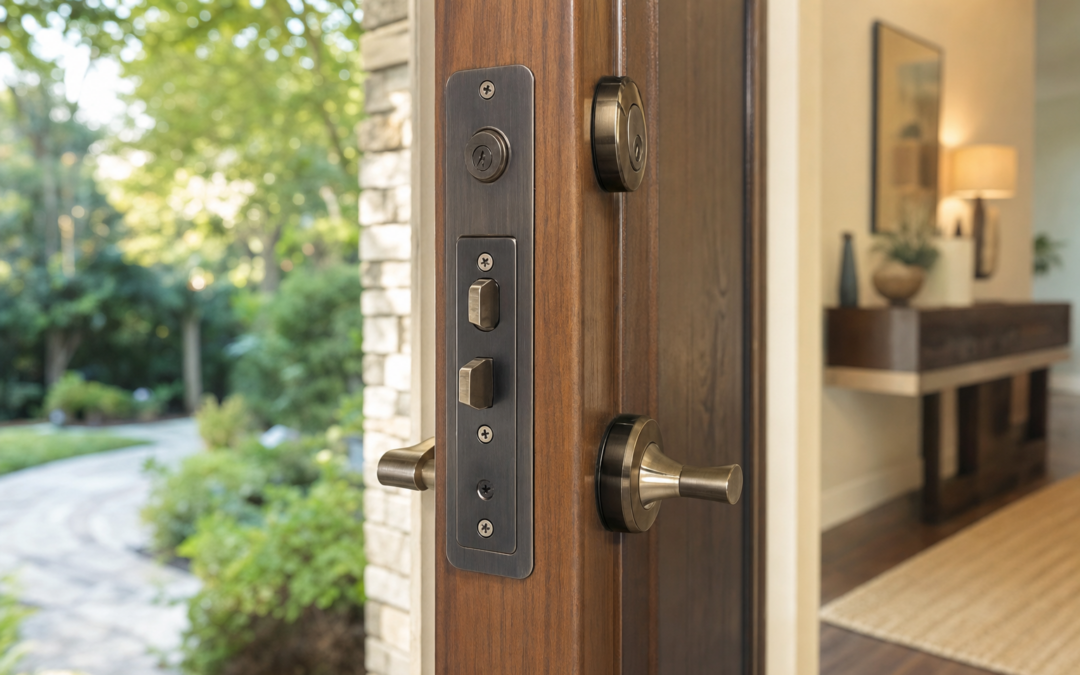
Most people think the best way to secure a front door is by upgrading the lock itself. While a solid deadbolt is important, the truth is that the weak link in most home entries is the door jamb, strike plate, and hinge attachment. Even a strong lock can fail if the surrounding wood or hardware isn’t reinforced. That’s why door reinforcement plates, strike upgrades, and jamb kits matter just as much—if not more—than the lock you buy.
In this practical guide, we’ll dig into the details of what makes your door vulnerable, how reinforcement hardware works, and what to look for in jamb kits, long screws, and strike plates. Whether you’re a renter wanting simple upgrades or a homeowner planning a full entry overhaul, you’ll find actionable tips and product picks below. For a broader look at all aspects of entry protection, check out our entry protection hub.
Why Door Jambs and Strike Plates Are the Real Weak Points
When burglars “kick in” a door, they’re rarely breaking the lock itself. Instead, the force splits the soft wood of the door jamb or rips the short screws out of the frame, allowing the door to swing open with the lock still engaged. The strike plate—the metal piece the deadbolt fits into—is usually attached with small screws and offers little resistance to brute force. Similarly, standard door hinges are often fastened with short screws that can’t hold up to a determined attacker.
This means that no matter how expensive or high-tech your lock is, if the surrounding structure isn’t reinforced, your door can be breached in seconds. Upgrading the lock is only half the solution; reinforcing the jamb, strike plate, and hinges completes the job.
How Door Reinforcement Hardware Works
Door reinforcement kits and plates distribute the force of an attempted break-in across a wider area. Instead of all the pressure focusing on a tiny section of wood, these kits use metal plates and longer screws to anchor the lock and hinges deeply into the house framing. This makes it dramatically harder to kick or pry the door open.
- Strike Plates: Heavy-duty strike plates are longer and thicker than standard ones, with multiple screw holes for extra-long screws that reach the wall stud.
- Jamb Reinforcement: Metal jamb shields or wrap-around kits reinforce the entire length of the door jamb, not just the strike area.
- Hinge Reinforcement: Upgraded hinges or added hinge bolts help prevent the door from being forced open on the hinge side.
These upgrades are often affordable and can be installed with basic tools in under an hour, making them a smart DIY project for most homeowners.
Choosing the Right Door Jamb Reinforcement Kit
Not all reinforcement kits are created equal. Some are simple strike plates with longer screws, while others are full-length steel shields for the jamb. When choosing a kit, consider:
- Length: Longer kits protect more of the jamb, making them harder to split or break.
- Material: Heavy gauge steel is best. Avoid thin or poorly finished metal that can bend or rust.
- Compatibility: Check if the kit fits your door thickness, swing direction, and lock placement.
- Installation: Look for kits that include clear instructions and all necessary hardware.
Full jamb reinforcement may require removing trim or cutting the jamb, but even basic upgrades with longer screws and a reinforced strike plate can make a big difference.

Door Lock for Front Door Kids Safety Home Security Door Reinforcement Locks Review — WINONLY latches & bolts gear aimed at buyers who want clear specs before they click through. Key figures include 3, 8 , 5 minutes.
The Importance of Long Screws—And Where to Put Them
One of the most cost-effective upgrades you can make is replacing the short screws that come with your door’s lock, strike plate, and hinges with longer, heavy-duty screws (typically 3 inches or more). This allows the hardware to anchor into the house’s wall studs rather than just the thin door frame.
- Strike Plate Screws: Replace all screws in the strike plate with 3-inch screws. This is where most break-ins focus their force.
- Hinge Screws: At least one screw per hinge (preferably the top and bottom hinges) should be replaced with a 3-inch screw driven into the stud.
- Deadbolt Plate Screws: If your deadbolt has a separate reinforcement plate, upgrade those screws too.
Use quality steel screws—not drywall screws—which are brittle and can snap under force. Even if you do nothing else, this simple upgrade can add significant resistance to kick-ins.
Strike Plate Upgrades: What to Look For
The standard strike plate that comes with most locks is thin and attached with short screws. Serious strike plates are longer (often 4–8 inches), thicker, and have multiple mounting holes. Look for plates that:
- Are made of hardened steel
- Have at least four screw holes
- Include long (3-inch+) screws
- Are sized to fit your door and lock (single or double deadbolt)
Some high-end strike plates even wrap around the edge of the jamb or come as part of a complete jamb reinforcement kit. These provide even greater protection against splitting or splaying of the door frame.

Door Lock for Front Door Reinforcement Lock for Kids Safety Review — Practical latches & bolts from HIGHEVER, summarized from hub features and listed measurements. Key figures include 800lbs, 12 , 5 minutes.
Hinge Security: Don’t Forget the Hinge Side
When reinforcing your door, don’t overlook the hinges. If the hinges are weak or attached with short screws, a burglar can force the door open from that side—even if the lock and strike plate are reinforced.
- Replace Short Screws: As with the strike plate, replace at least one screw per hinge with a 3-inch screw driven into the wall stud.
- Upgrade Hinges: Consider security hinges with non-removable pins, especially if your door swings outward and the hinge pins are exposed.
- Install Hinge Bolts: These project into the door frame when the door is closed, preventing the door from being removed even if the hinge pins are compromised.
In most break-ins, the strike side gives way first, but reinforcing the hinge side ensures that your upgrades work as intended.
Full-Length Jamb Shields: When to Go All-In
For maximum protection, consider installing a full-length jamb shield or wrap-around kit. These are heavy-duty steel plates that run the entire length of the door frame, distributing force over a much larger area.
- Best for high-risk areas or if you’ve experienced attempted break-ins
- Usually require removing trim and possibly modifying the jamb
- Can be paired with upgraded strike plates and long screws for a layered defense
While more work to install, these shields are among the most effective defenses against forced entry. If you’re comfortable with basic carpentry, installation is a solid weekend project.

Door Reinforcement Lock Door Locks for Kids Safety Home Security Review — A WINONLY pick in Latches & Bolts that focuses on real-world usability Key figures include 800 lbs, 12, 8 .
Supplemental Door Reinforcement Locks
Beyond traditional locks and reinforcement kits, you can add secondary door reinforcement locks. These are surface-mounted devices that prevent the door from opening even if the main lock is compromised. They’re sometimes called “door barricades” or “child safety locks,” but many are strong enough to resist serious force.
- Install above or below the main lock for added security
- Look for models rated for 800 lbs or more of force
- Easy to install and operate, making them renter-friendly
- Also provide additional safety for families with children
These devices work best in combination with proper jamb and strike reinforcement. Think of them as an added layer, not a substitute for structural upgrades.
Entry Door Material and Fit: The Foundation of Security
Even the best hardware can’t compensate for a poorly fitted or low-quality door. For real security, your entry door should be:
- Solid core or metal (not hollow)
- Fitted tightly in the frame, with minimal gaps
- Installed with attention to plumb and square alignment
- Free from rot, cracks, or warping
If your door is hollow-core, consider replacing it as part of your security upgrade. Reinforcement hardware is most effective when anchored to a solid, well-installed door and frame.

Door Reinforcement Lock Home Security Door Lock Child Proof Kids Safety Review — Practical latches & bolts from EverPlus, summarized from hub features and listed measurements. Key figures include 3, 4 , 1.
DIY Installation Tips and Common Mistakes
Installing reinforcement plates and longer screws is within reach for most DIYers, but there are some pitfalls to avoid:
- Pre-Drill Pilot Holes: Prevent wood splitting by drilling small pilot holes before driving long screws.
- Check for Wires or Pipes: When drilling into the jamb or wall stud, be mindful of any electrical or plumbing behind the frame.
- Align Hardware Carefully: Ensure new strike plates or shields don’t interfere with the door’s operation.
- Use All Provided Screws: Don’t skip screw holes—more attachment points mean more security.
- Test After Installation: Close and lock the door several times to confirm smooth operation and fit.
If you’re unsure about any step, consult a professional or check manufacturer installation videos. Most products include templates or guides to help with alignment.
Combining Reinforcement Hardware for Maximum Effect
The most secure entry doors use a combination of upgrades:
- High-quality deadbolt lock
- Heavy-duty strike plate with long screws
- Jamb reinforcement plate or shield
- Upgraded hinges and long hinge screws
- Supplemental surface-mounted reinforcement lock
This layered approach means that even if one element is compromised, the others provide backup protection. It’s the same principle used in commercial and institutional security—multiple barriers, each reinforcing the other.
Frequently Asked Questions About Door Reinforcement
- Will reinforcement hardware affect my door’s appearance?
Most strike plates and jamb shields are designed to be as unobtrusive as possible. Some paintable options are available, and many can be covered by existing trim. - Can I install reinforcement hardware on a metal or fiberglass door?
Yes, but you may need specialized screws or drill bits. Always check manufacturer guidelines for compatibility. - What about renters—are these upgrades reversible?
Many upgrades, like longer screws and supplemental surface-mounted locks, can be removed later with minimal evidence. Always check your lease and ask your landlord if unsure. - How much does it cost to reinforce a door?
Basic upgrades (screws and strike plates) can be done for under $50. Full jamb shields or high-end kits may cost $100–$200 plus installation if you hire a pro.
Final Thoughts: Prioritizing Real-World Entry Protection
It’s easy to get distracted by high-tech locks and gadgets, but the most effective door security upgrades are often the simplest and most affordable. Reinforcing the door jamb, strike plate, and hinges with robust hardware and long screws can stop most forced-entry attempts cold. Paired with a solid door and a quality deadbolt, these upgrades offer peace of mind without breaking the bank.
For more entry protection strategies, detailed product reviews, and step-by-step guides, visit our main entry protection hub.
Remember: The lock is only as strong as what it’s attached to. Reinforce your door’s weak points, and you’ll be ahead of 90% of U.S. homes when it comes to real-world security.
Door Reinforcement Installation Checklist
- Assess Your Door and Frame: Examine both the door and the frame for existing damage, rot, or warping. Reinforcement is most effective on solid, undamaged wood.
- Gather All Tools and Materials: Basic tools include a drill, screwdriver, tape measure, pencil, and possibly a chisel or utility knife for minor adjustments.
- Choose the Correct Reinforcement Kit: Match the kit to your door’s thickness, swing direction, and lock placement. Confirm that all hardware is included.
- Test-Fit Components: Before drilling, position plates and shields to ensure they fit around existing locks and hinges without obstruction.
- Mark Screw Locations: Use a pencil to mark where long screws will go, ensuring they align with wall studs and not just the frame or trim.
- Pre-Drill Holes: Pre-drilling prevents wood splitting and makes installation easier, especially for long screws.
- Install Strike Plates and Jamb Shields: Attach with provided hardware, using at least 3-inch screws where possible.
- Reinforce Hinges: Replace at least one screw per hinge with a 3-inch screw, ideally on the door frame side.
- Test Door Operation: Open and close the door several times to ensure smooth operation and that the deadbolt fully engages the strike plate.
- Check for Gaps: Make sure weatherstripping and door alignment haven’t been affected. Adjust as needed.
Following this checklist will help you avoid common pitfalls and maximize the effectiveness of your door reinforcement hardware.
Common Door Reinforcement Mistakes to Avoid
- Using Short Screws: Many DIYers skip upgrading to longer screws, leaving the hardware vulnerable. Always use at least 3-inch steel screws for strike plates and hinges.
- Improper Plate Alignment: Misaligned strike plates or jamb shields can prevent the deadbolt from fully engaging, reducing security and causing lock issues.
- Neglecting the Hinge Side: Reinforcing only the lock side ignores the fact that doors can be forced open from the hinge side as well. Upgrade both sides for balanced security.
- Over-Tightening Screws: Excessive force can strip screw holes or damage the door frame. Tighten screws firmly, but do not overtighten.
- Forgetting Weatherstripping: Some reinforcement kits may interfere with door seals, allowing drafts or moisture in. Check and adjust weatherstripping after installation.
- Ignoring Manufacturer Instructions: Each kit may have unique requirements. Read all instructions to ensure proper installation and warranty coverage.
Avoiding these mistakes will ensure your door reinforcement is both secure and reliable for years to come.
Maintaining Door Reinforcement Hardware
Once your door reinforcement is installed, ongoing maintenance ensures it continues to provide maximum protection. Here are some best practices:
- Regularly Inspect Screws and Plates: At least twice a year, check all screws for tightness and any signs of rust, corrosion, or loosening.
- Check Door Alignment: Seasonal changes can cause wood to expand or contract, potentially affecting the door’s fit and the alignment of locks and plates. Re-adjust as needed.
- Clean and Lubricate: Clean hardware with a damp cloth to remove dust and debris. Lubricate moving parts of the lock and hinges with a silicone-based spray to prevent sticking.
- Address Damage Promptly: If you notice any cracks, warping, or damaged hardware, repair or replace immediately to maintain security.
- Monitor for Tampering: Look for signs of attempted forced entry, such as scratches, bent plates, or loosened screws, and reinforce or upgrade if necessary.
Consistent maintenance not only preserves your security investment but also helps you catch minor issues before they become major vulnerabilities.
Frequently Asked Questions About Door Reinforcement
Will reinforcing my door jamb and strike plate really stop a break-in?
While no solution can make a door completely impenetrable, proper reinforcement dramatically increases the time and effort required to force entry. Most burglars seek easy targets and will move on if a door resists their initial attempts.
Can I install reinforcement plates and longer screws myself, or do I need a professional?
Most door reinforcement kits are designed for DIY installation and include instructions. If you’re comfortable using basic tools and following directions, you can handle this project. However, for doors with existing damage or complex trim, hiring a professional may ensure the best results.
Will door reinforcement affect how my door looks or works?
High-quality reinforcement kits are designed to be as unobtrusive as possible. Some may add visible metal plates, but these are usually low-profile and can be painted to match your trim. Proper installation should not interfere with normal door operation.
Are there reinforcement options for renters?
Yes! Renters can use non-permanent upgrades like longer screws in strike plates and hinges, portable door braces, or latch guards that require minimal or no modification to the door or frame. Always check your lease and get landlord approval for any significant changes.
How do I know if my door is already reinforced?
Look for heavy-duty metal plates around the lock and strike area, long screws in the strike plate and hinges, or steel shields running the length of the jamb. If you only see small screws and thin metal, your door likely needs an upgrade.
What about reinforcing sliding doors or double doors?
Sliding doors require different solutions, such as security bars, auxiliary locks, and anti-lift devices. Double doors benefit from flush bolts, astragals, and reinforced strikes on both doors. See our entry protection hub for more guidance on these door types.
How often should I upgrade or reassess my door security?
Review your door security every few years, after moving in, or following any attempted break-in. Advances in hardware and changes in your neighborhood’s security risks may mean it’s time for a new upgrade.